LUMEEA
Conceptual project
Methodology
Research Stage
qualitative
2 expert interviews Competitive analysis & benchmarking
Ideation
2 rounds
Dark-side ideation · 5 participants
Testing
3 methods
Usability testing Wizard-of-Oz testing Desirability testing
- Project type
- Behavioral design, Digital well-being
- Role
- Independent Concept, Product Designer
- Medium
- Behavioral design, Digital well-being
- Tools
- Miro · Figma · Framer
The Vision: A Tool Designed to be Closed.
Lumeea rejects standard industry metrics of retention and screen time. Instead, it serves as a narrative-driven bridge that safely guides users out of the digital ecosystem and back into real-world capability. Grounded in Self-Determination Theory, Lumeea prioritizes active resets and intrinsic motivation over toxic gamification. Success is not measured by daily streaks, but by the energy found in meaningful, off-screen human connection.
Young adult professionals operating in remote environments who feel stuck in a digital loop, seeking an intervention to mitigate the negative effects on their mental well-being by increasing motivation and diminishing their feelings of isolation.
- Remote work isolation
- Digital consumption fatigue
- Seeking meaningful connection
- Need for motivation boost
- Desire for analogue validation
- Cognitive overload avoidance
How might we design a "Cognitive Speed Bump" to break young professionals' automatic digital consumption and mitigate isolation?
Young professionals require a modality to break their cyclical, automatic and counterproductive consumption of digital media that negatively impacts their well-being. Within the target group, a potential design solution must behave as a "Cognitive Speed Bump":
A Tool Designed to be Closed.
Build motivation and self-efficacy with a narrative-driven bridge that moves users from the digital fog back to real-world capability. By prioritising active resets and analogue validation, we create a tool that is designed to be closed, where success is measured by the energy found in meaningful, off-screen human connection.

Research Insights
Always-on work dynamics delay personal commitments, creating a disconnect between daily actions and long-term growth (Future Work Self).
Mental exhaustion is not caused by screens, but by constant availability eroding the border between work and personal space.
Cognitive depletion destroys self-regulation, slipping users out of intentional focus into passive, error-prone automatic behaviour.
Doomscrolling acts as a quick-fix proxy for connection, delivering temporary dopamine rather than genuine cognitive restoration.
To break the loop, design interventions must act as a gentle interrupt, pausing automatic habits to redirect users toward deliberate action.
Designing a product meant to be closed
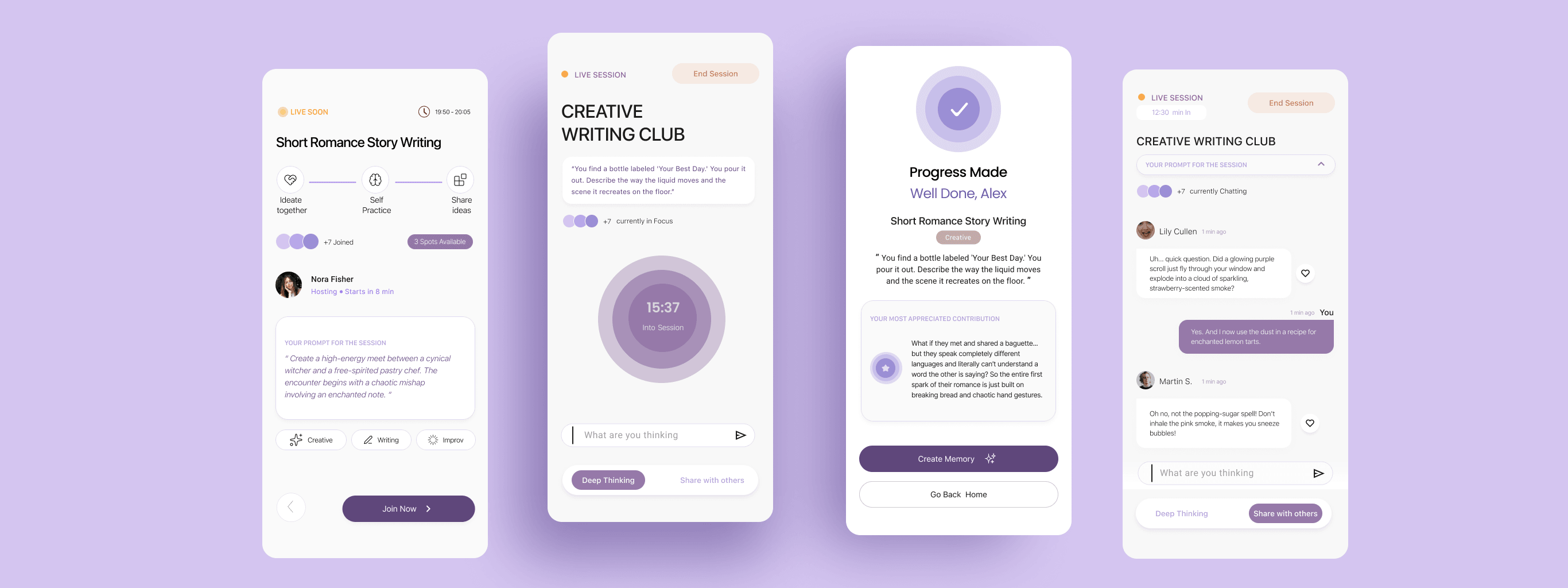
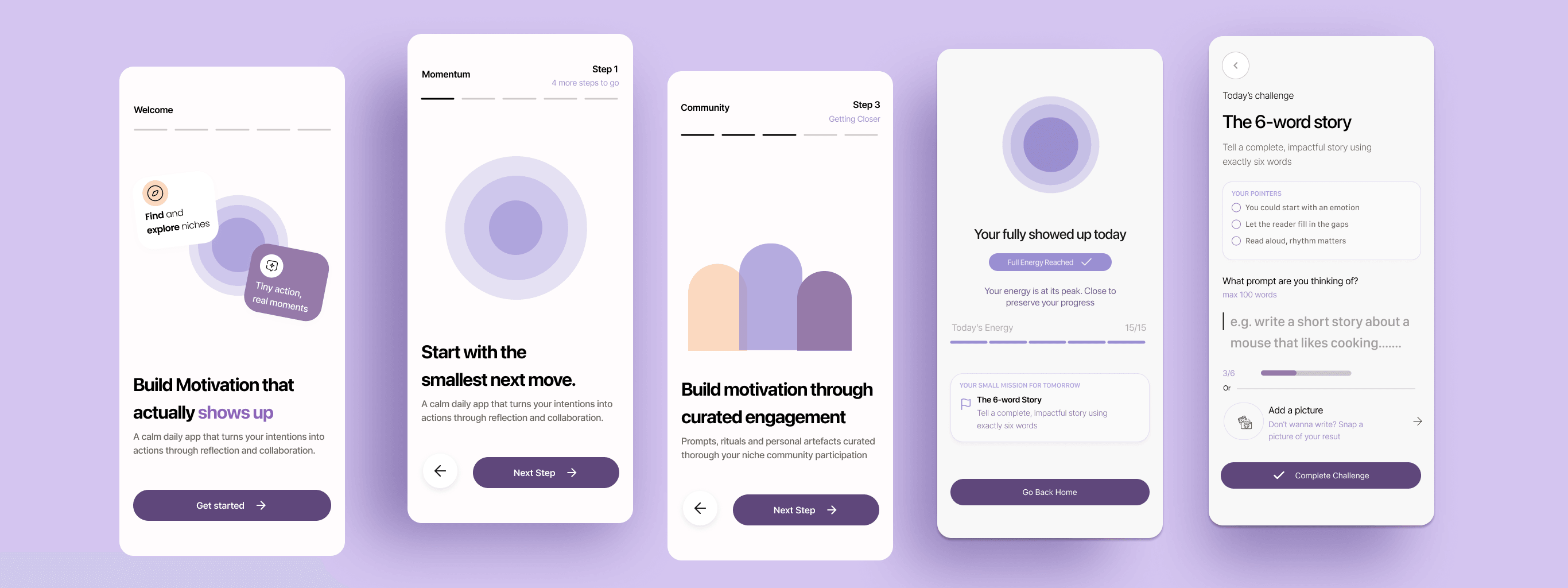
An anti-retention design approach. Every screen was architected to guide users toward meaningful off-screen action, measuring success by the energy found in real-world connection.
Solving the screen fatigue with another screen
Chosen to meet users in their familiar digital environment at home right after work, acting as an easily accessible transitional bridge rather than forcing an abrupt context switch.
Research suggests that digital tools can be most effective when they act as a bridge to real-world action, rather than becoming the destination themselves.
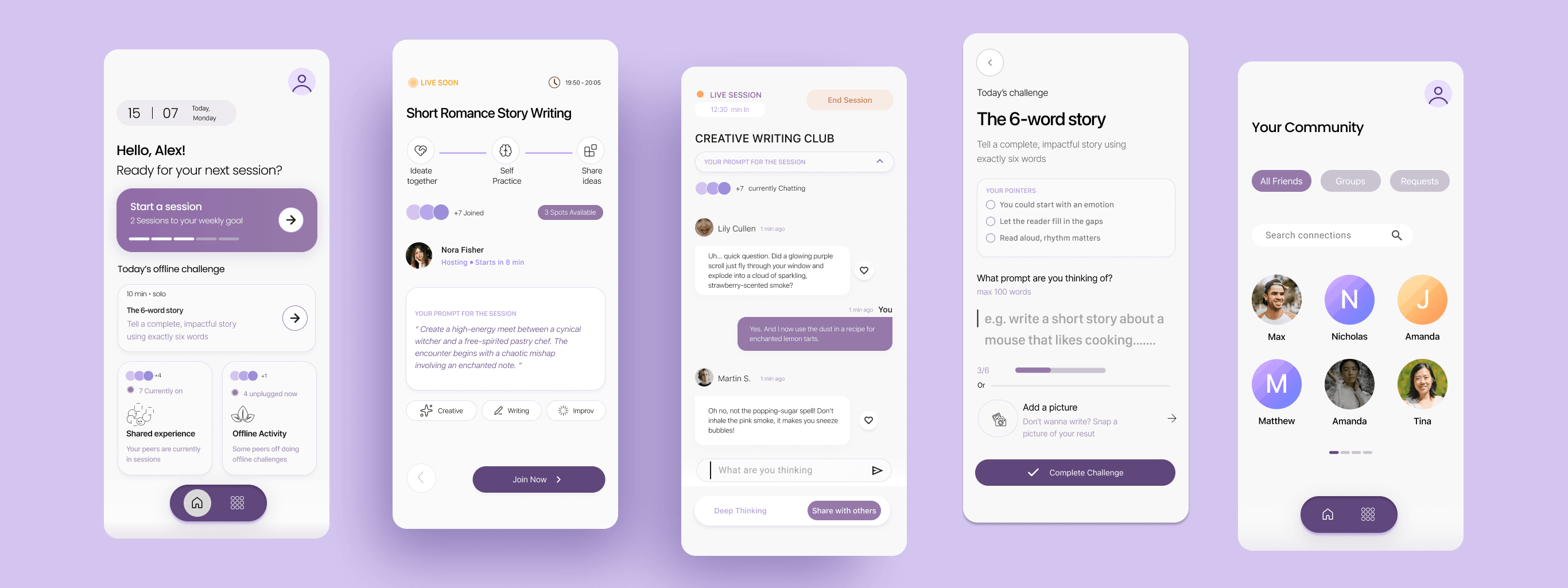
Positioning Lumeea as a mobile-first experience allows the intervention to sit directly where users need it most, within the vulnerable transitional window between work and personal time, where digital fatigue and passive doomscrolling typically take hold. By decoupling the experience from the work laptop, the mobile screen acts as a tactile 'cognitive speed bump' that interrupts automatic habits without adding productivity friction.
“When I'm on my laptop, I feel like I should be working. Opening a break app on the laptop doesn't feel like stepping away.”
Participant 03 - Medium Preference Study“Using my phone creates a clear mental shift. It acts as a physical buffer between my work day and my personal time.”
Participant 07 - User InterviewDesigned to be Closed
The core philosophy shifts focus away from retention or continuous screen engagement, defining success by the user's transition into off-screen, real-world activities.
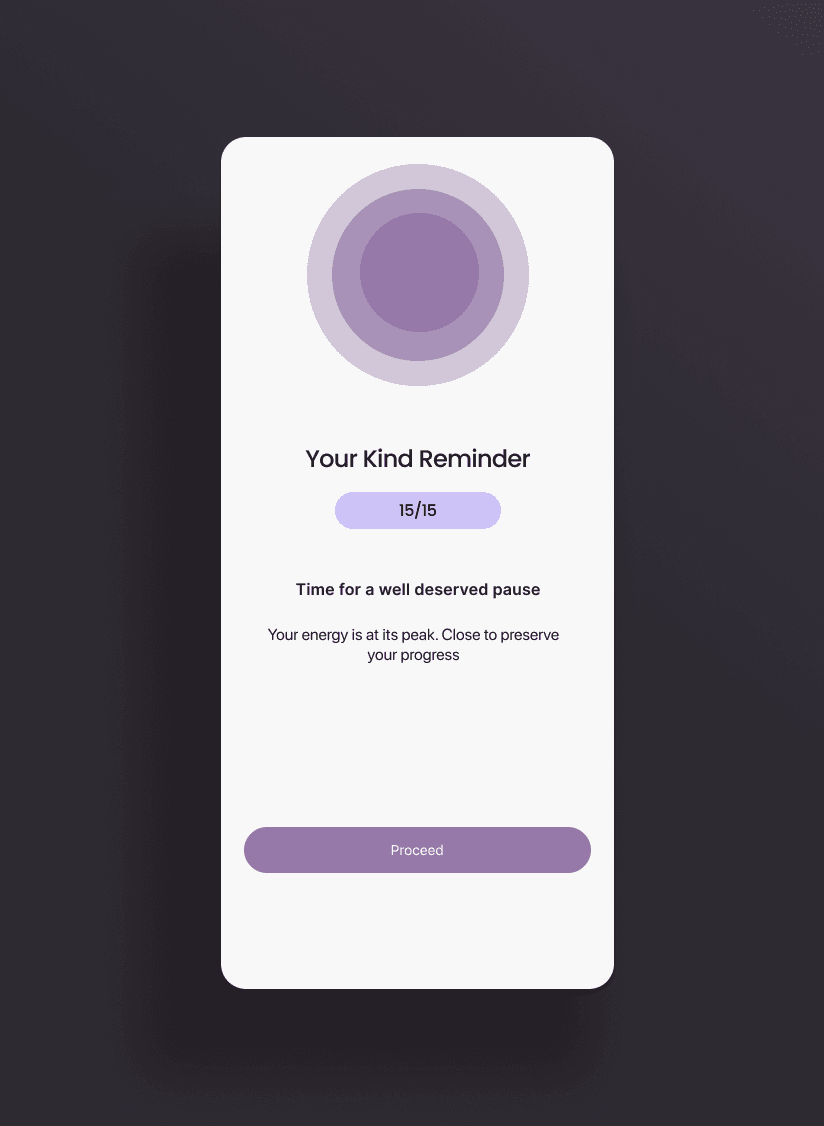
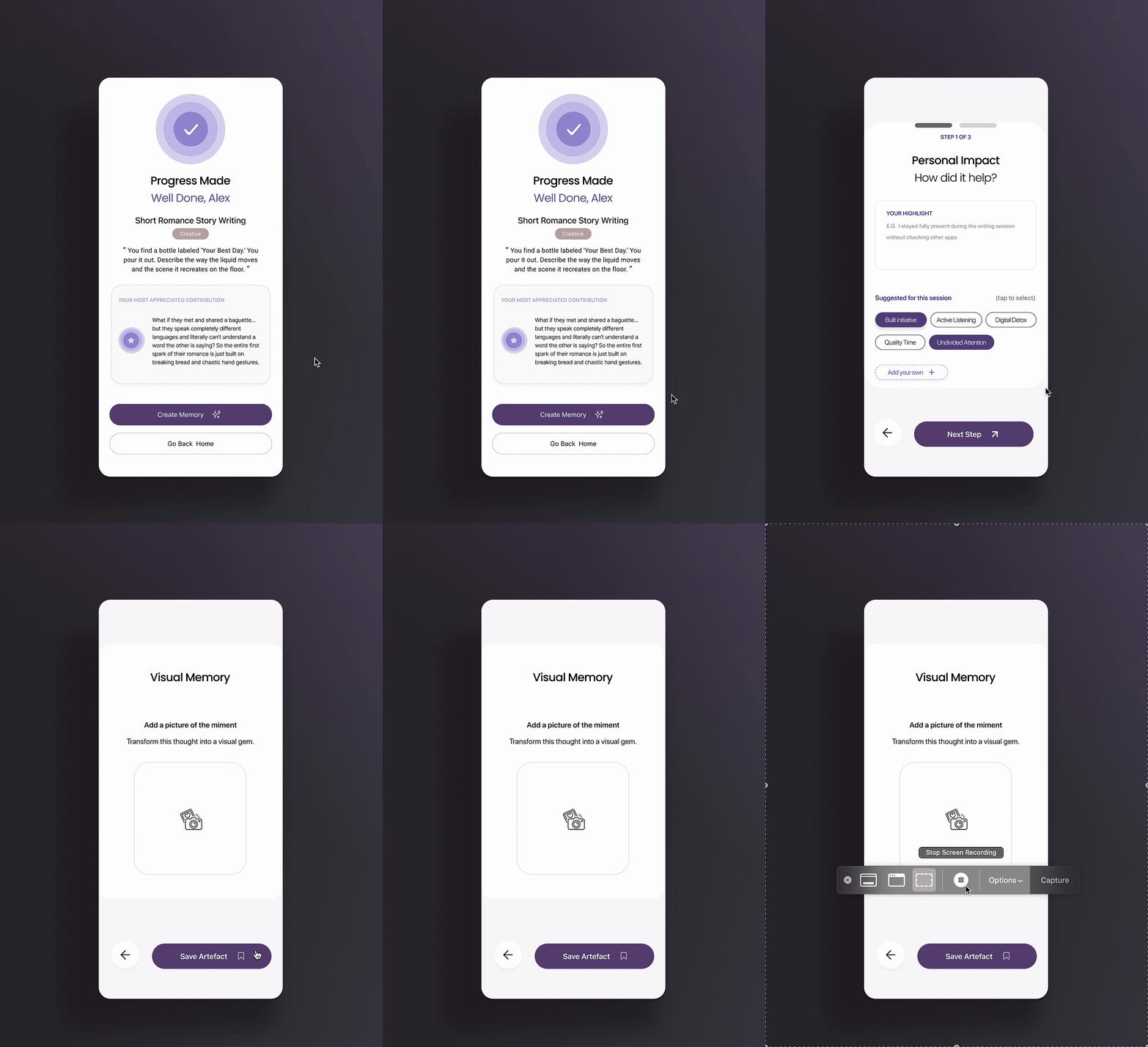
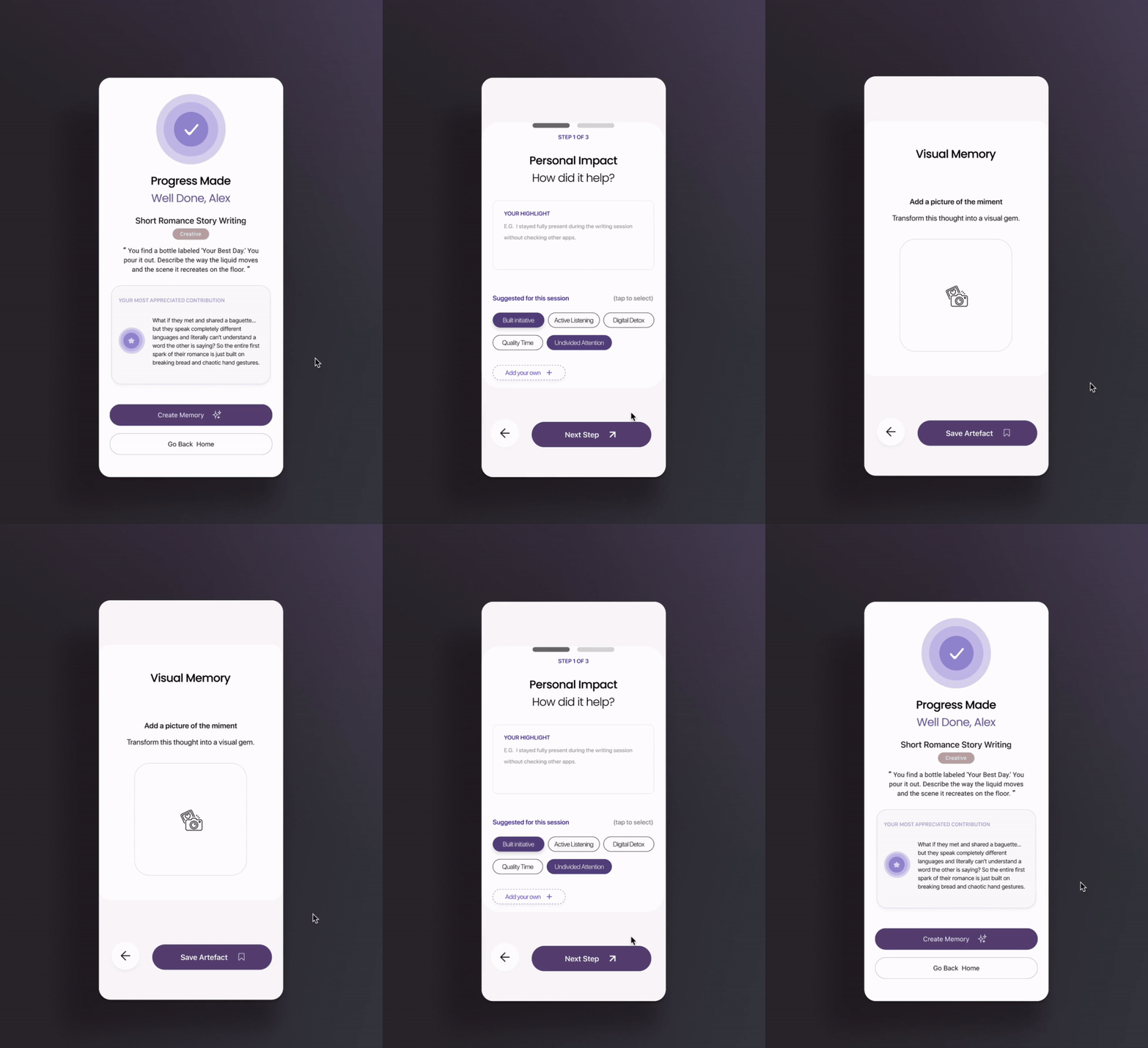
Unlike conventional digital platforms that optimize for session length and screen retention, Lumeea intentionally inverts the engagement metric. Every session is architected to end with an immediate, frictionless exit from the screen, guiding the user into an offline analogue action. By framing the app closure as the primary success signal, the design honors the user's focus and active off-screen well-being.
“On breaking screen habits & doomscrolling: Usually, after stopping a task, I immediately open social media out of exhaustion. The offline prompt gives me a moment to pause and step away from screens entirely.”
Participant 02 - Habit Interruption Diary“On the feeling of completion vs. retention traps: It feels like a friendly tap on the shoulder saying 'you're done, go enjoy the offline world' rather than trying to keep my attention locked on the screen.”
Participant 05 - Session Exit Interview“On real-world friction and action: Having an analogue challenge right at the end makes closing the app feel like an achievement instead of leaving me stuck wondering what to do next.”
Participant 09 - Offline Artefact TrialNon-Competitive Environment
Removing points, ranks, streaks and popularity metrics reduces opportunities for social comparison and shifts the emphasis toward personal progress.
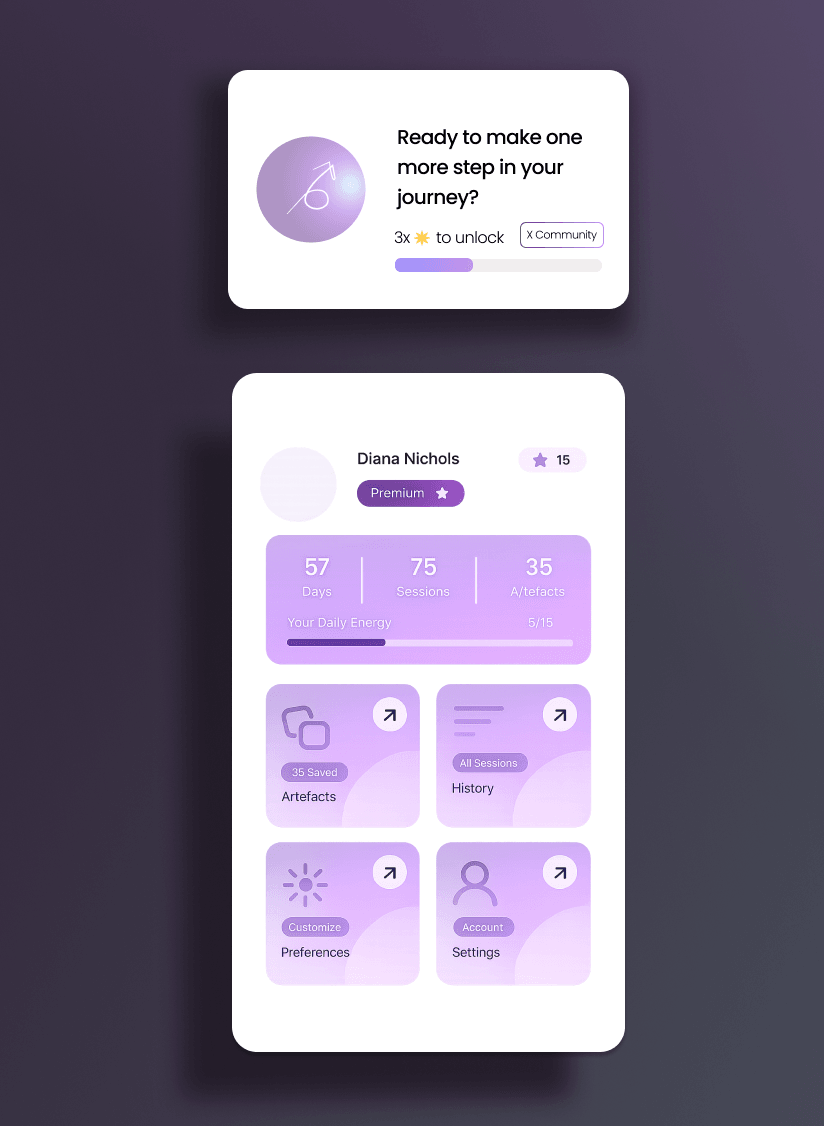
Stripping the UI of comparative metrics, streaks, and numeric scoreboards prevents the social pressure and performance fatigue that often drive avoidance behavior. By replacing competitive tracking with reflective self-documentation, the interface removes external judgment and shifts focus entirely toward quiet, intrinsic personal progress and psychological safety.
“Streaks make me feel guilty if I miss a day. Seeing my past sessions as cards feels like looking through an album of accomplishments rather than a test score.”
Participant 04 - Demetricated Experience Trial“Without numbers or leaderboards, I don't feel judged. I can just focus on my personal reflection rather than trying to hit a metric.”
Participant 08 - Intrinsic Motivation SurveyBinary Session Structure
Open sessions feature a toggle between Deep Focus Mode (off-screen individual reflection with co-presence) and Community Open Chat (asynchronous idea sharing).
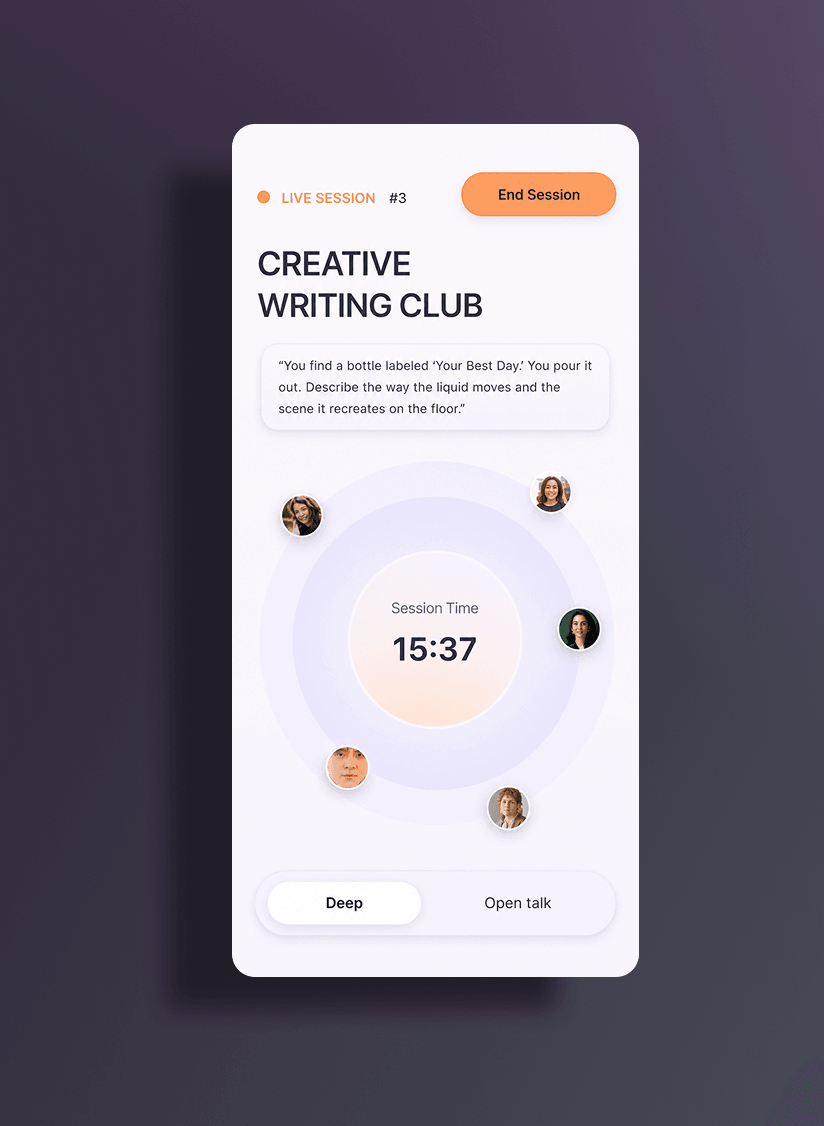
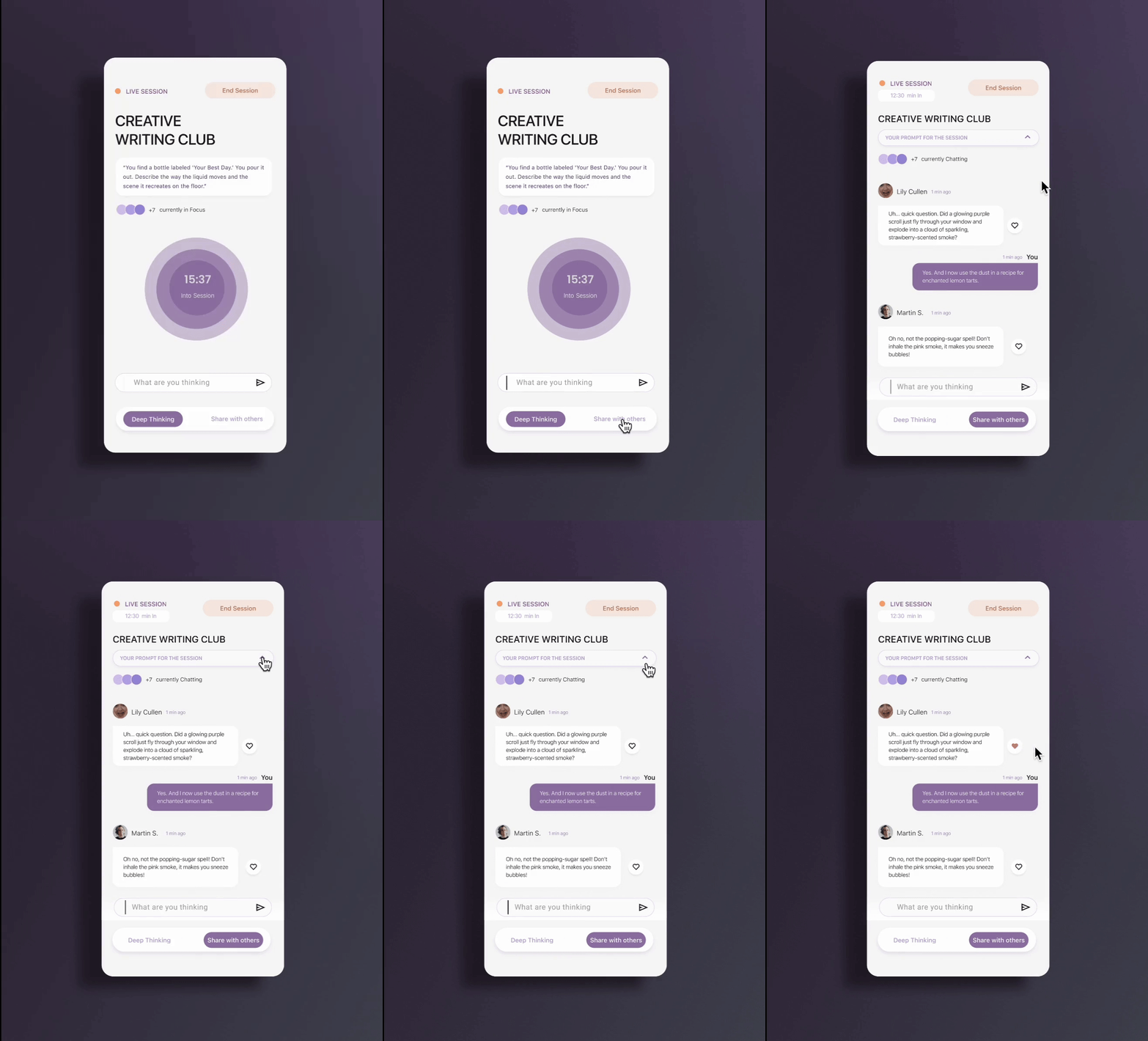
This dual-mode architecture empowers users to calibrate their social exposure dynamically based on their real-time cognitive energy. By offering a direct choice between quiet, asynchronous focus alongside others or low-stakes community sharing, the system delivers ambient accountability and social presence without triggering video fatigue or social overload.
“In live video calls, I feel constantly watched. The ambient presence gives me the quiet company I actually need when I'm exhausted.”
Participant 01 - Co-Presence Prototype“I don't have to talk to anyone or perform, but seeing that others are here working on their own tasks makes me feel less isolated.”
Participant 06 - Social Connection DiaryThe Offline Exit & Artefacts
Setting daily interaction limits that trigger low-stakes analogue challenges, allowing users to log physical outcomes into a personal memory gallery.
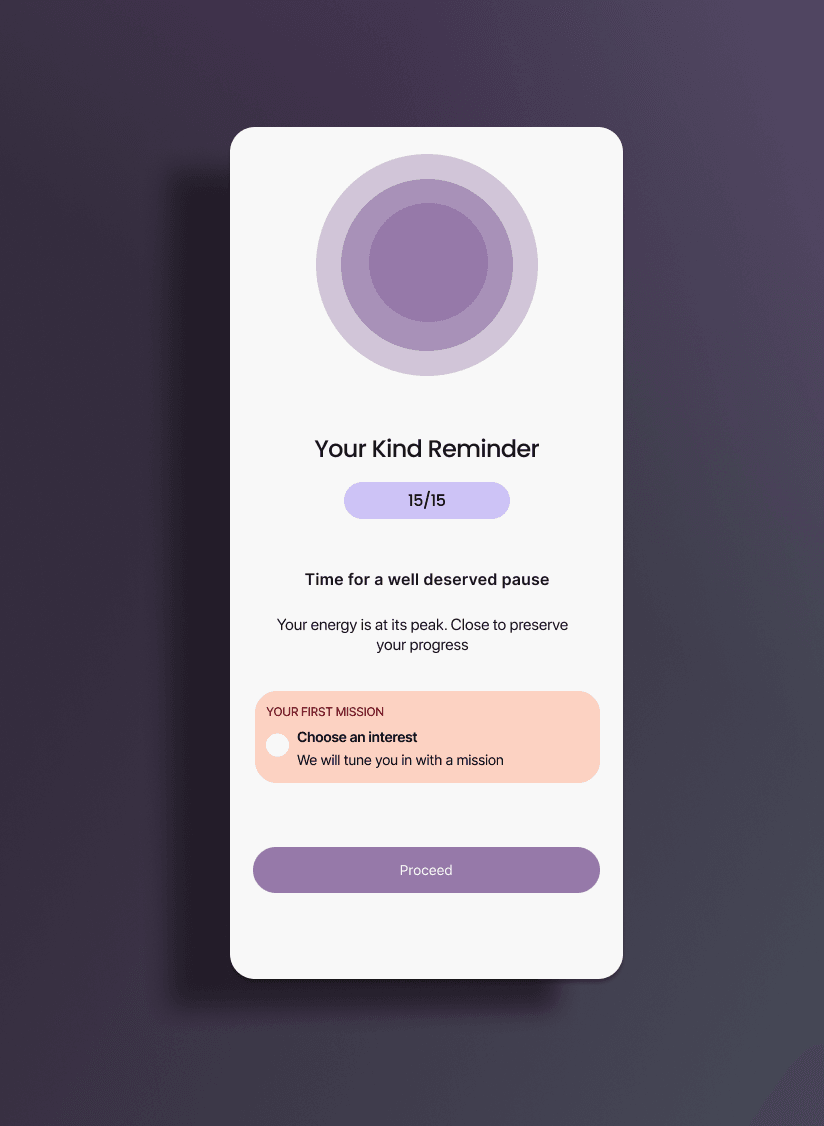
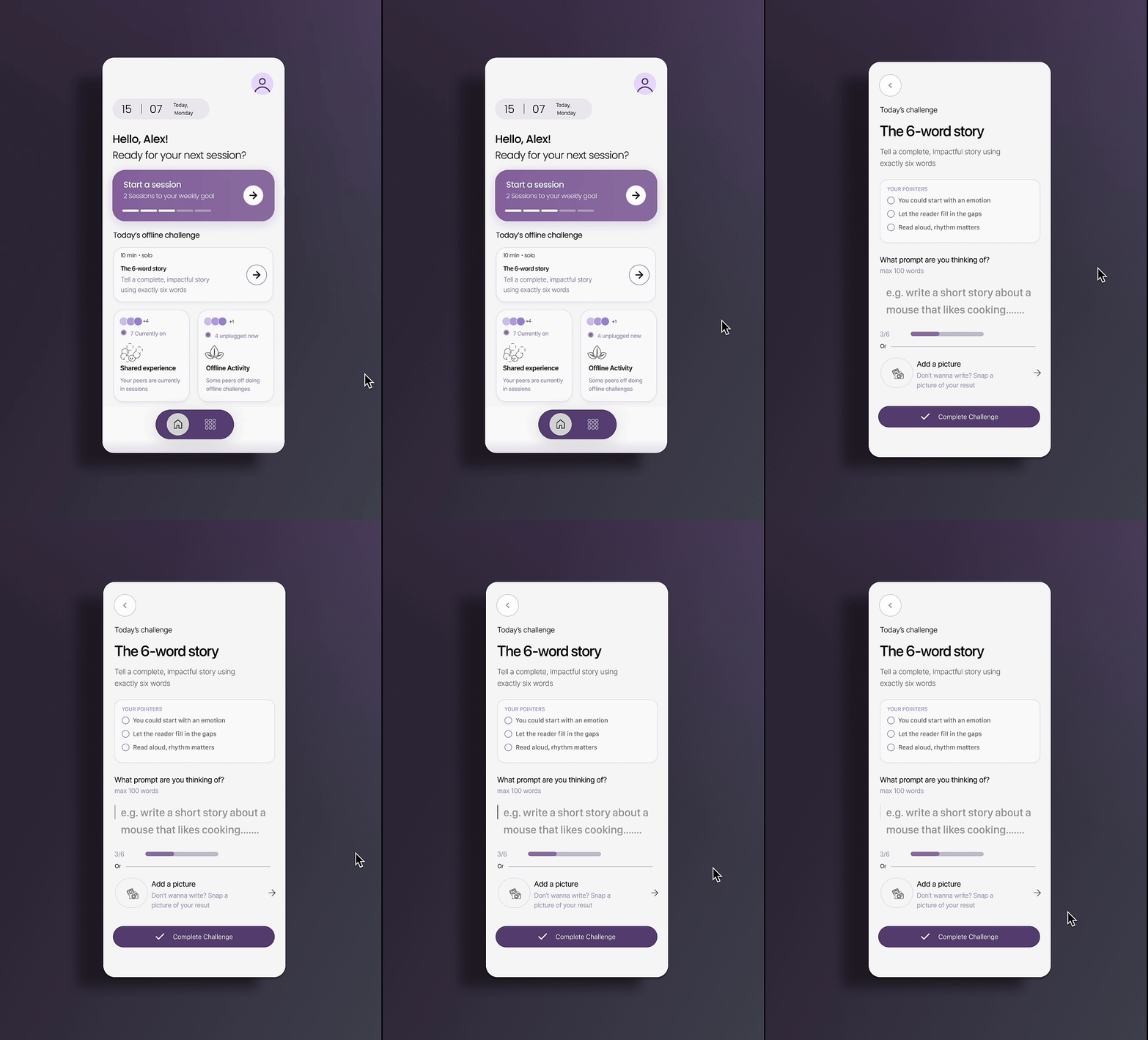
The memory gallery transforms completed off-screen actions into tangible visual proofs of personal growth. By capturing real-world offline achievements as card-based memory artifacts rather than points, the design creates a meaningful personal archive that reinforces intrinsic motivation far more effectively than any artificial reward system could.
“Usually, after stopping a task, I immediately open social media out of exhaustion. The offline prompt gives me a moment to pause and step away from screens entirely.”
Participant 02 - Habit Interruption Diary“It feels like a friendly tap on the shoulder saying 'you're done, go enjoy the offline world' rather than trying to keep my attention locked on the screen.”
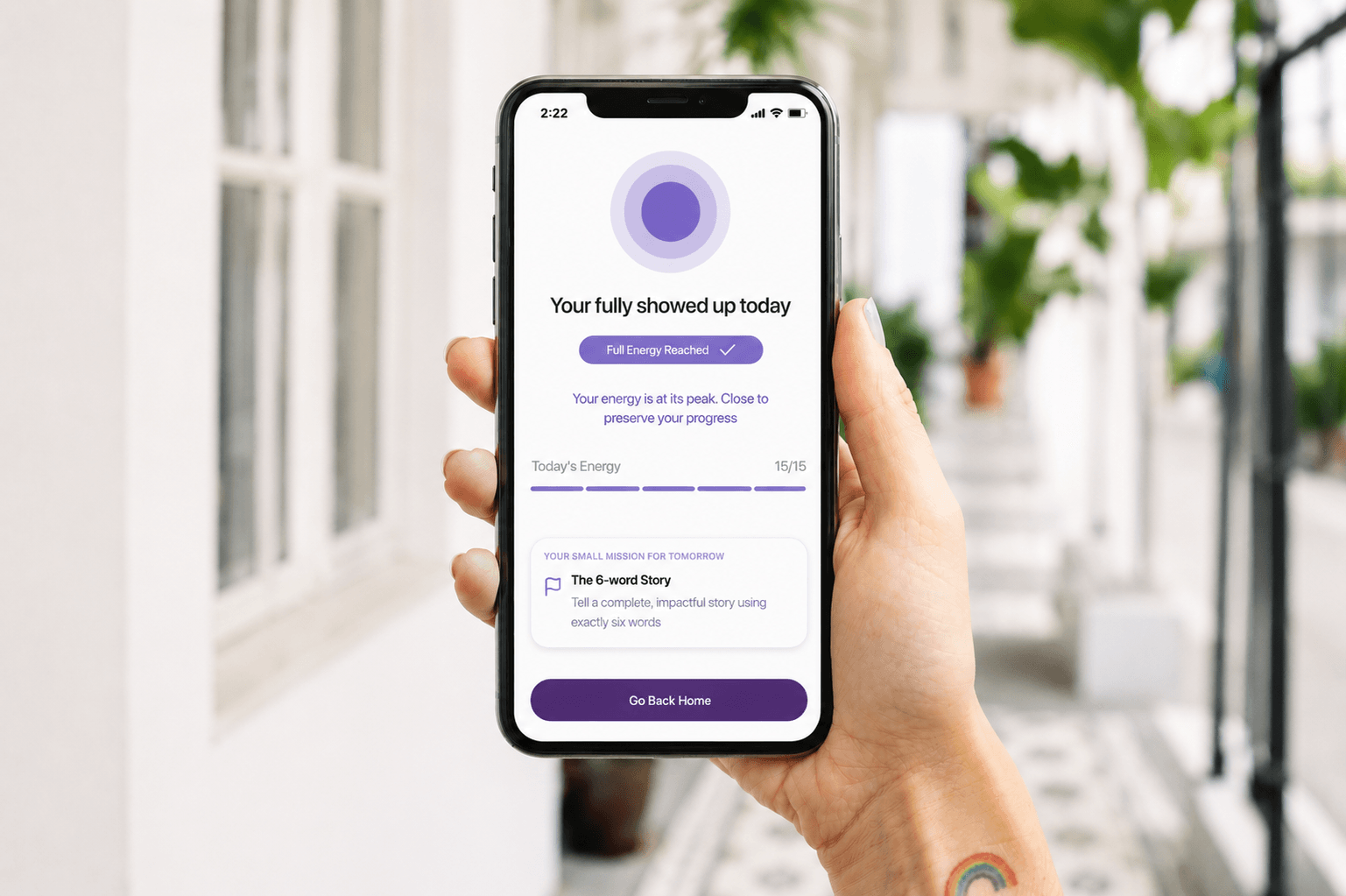
Participant 05 - Session Exit InterviewLumeea beyond the core flow
An anti-retention design approach. Every screen was architected to guide users toward meaningful off-screen action, measuring success by the energy found in real-world connection.
What the concept demonstrated
These findings reflect concept and prototype validation, not production analytics.
Deep Focus mode gave participants a lower-pressure alternative to visible group participation.
validated
Qualitative prototype feedback; no longitudinal anxiety measure is available.
Asynchronous presence gave participants a sense of company without requiring performance.
validated
Observed in the documented co-presence prototype sessions.
Reduced text density and staged onboarding made the concept easier to understand in testing.
validated
Usability-test direction; production completion data remains unavailable.
Designing Lumeea required shifting from standard growth models toward an "anti-retention" philosophy. My core challenge was building a "Cognitive Speed Bump" to bridge digital saturation with real-world capability. By integrating Self-Determination Theory, I replaced toxic engagement loops with demetricated, intrinsic motivators.